

A 12V 200Ah battery can be the difference between one quiet night away and several days of practical electrical independence. But how long does a 12V 200Ah battery last in a motorhome, boat or off-grid cabin? The useful answer is not a single number. It depends on the battery chemistry, usable depth of discharge, connected loads, inverter losses, temperature and how much solar charging you have available.
For a correctly specified 12V 200Ah LiFePO4 battery, expect roughly 2.3kWh of usable energy for routine planning. That is enough for modest 12V loads over several days, but a high-power mains appliance can consume the same reserve in a few hours.
How long does a 12V 200Ah battery last in hours?
Start with the battery’s stored energy in watt-hours:
`12.8V × 200Ah = 2,560Wh`
LiFePO4 batteries are commonly described as 12V batteries, but their nominal voltage is usually around 12.8V. A 200Ah model therefore stores approximately 2.56kWh when fully charged. For dependable system planning, allow around 90% usable capacity rather than assuming every watt-hour is available:
`2,560Wh × 0.90 = 2,304Wh usable`
Divide this usable energy by the power draw in watts. A 50W load could run for about 46 hours. A 100W load could run for about 23 hours. A continuous 500W load would run for roughly 4.6 hours, while a 1,000W load would reduce runtime to around 2.3 hours.
These figures assume the load is genuinely continuous. In real-world motorhome, marine and off-grid systems, most equipment cycles on and off. A compressor fridge may draw substantial current while running, for example, but it does not run every minute of the day. This is why daily watt-hour consumption is usually more useful than simply adding the wattage printed on each appliance.
A simple runtime formula
Use this calculation for an initial estimate:
`Battery voltage × battery Ah × usable discharge ÷ load watts = runtime in hours`
For example, a 12V 200Ah LiFePO4 battery powering a 120W load through an inverter with 90% efficiency would be calculated as follows:
`12.8 × 200 × 0.90 × 0.90 ÷ 120 = 17.3 hours`
The first 90% reserves some battery capacity. The second 90% accounts for inverter efficiency. It is a realistic planning method for AC appliances rather than an optimistic laboratory figure.
Typical 12V 200Ah battery runtime examples
A 12V 200Ah LiFePO4 battery is well matched to moderate onboard electrical use. The examples below assume approximately 2,300Wh usable energy before inverter losses.
A 12V compressor fridge using an average of 35W over 24 hours consumes about 840Wh per day. The battery could support it for around two and a half days with no charging, although ambient temperature, fridge size, ventilation and door opening frequency can change the result considerably.
A 60W Starlink or mobile internet system running continuously consumes about 1,440Wh per day before conversion losses. A 200Ah battery can therefore cover roughly one full day, with limited reserve for lighting, water pumps or device charging. For remote work, solar input becomes a core part of the system rather than an optional extra.
LED lighting, USB charging and a water pump are low-energy loads when used sensibly. Ten watts of LED lights for five hours uses only 50Wh. A 12V water pump may draw 60W to 100W, but normally operates for minutes rather than hours. These loads rarely determine battery size on their own.
High-power heating appliances are different. A 1,000W kettle, coffee machine, hair dryer or electric heater can rapidly exhaust a 12V battery bank. Even if the appliance is used only briefly, the inverter and cabling must safely handle very high DC current. A 1,000W AC load can require more than 90A from a 12V battery once inverter losses are included. A 2,000W appliance can exceed 180A.
For this reason, 12V 200Ah is excellent for refrigeration, lighting, pumps, electronics and controlled inverter use. It is less suitable as the only power source for regular electric cooking or space heating.
Why battery chemistry changes the answer
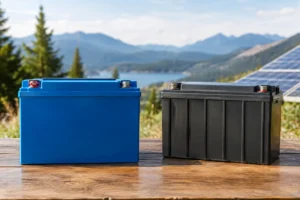
A 12V 200Ah lead-acid battery and a 12V 200Ah LiFePO4 battery do not deliver the same practical runtime.
Lead-acid batteries are often planned around 50% depth of discharge to avoid accelerated wear. A nominal 2.4kWh lead-acid battery may therefore provide only about 1.2kWh of routinely usable energy. At higher discharge currents, effective capacity also falls because of the Peukert effect. Voltage drops more sharply under load, which can cause an inverter to cut out while capacity remains on paper.
LiFePO4 technology provides a much flatter voltage curve, higher usable capacity and better efficiency under typical motorhome and marine loads. A quality battery with an integrated BMS also provides protection against overcharge, excessive discharge, over-current and temperature limits. This makes a 12V 200Ah LiFePO4 battery a practical replacement for a substantially larger lead-acid bank in many installations.
Cycle life matters as much as one-trip runtime. A long-life LiFePO4 battery rated for 6,000+ cycles can provide years of regular service when it is charged correctly and installed within its specified operating limits. The initial purchase price should therefore be considered against usable energy, weight, charging speed and service life, not amp-hours alone.
Factors that shorten real-world runtime
The appliance rating is only the beginning. Inverter efficiency is one of the most common overlooked losses. A good pure sine wave inverter may be around 90% to 95% efficient at a suitable load, but it also has an idle consumption. Leaving a large inverter switched on overnight to supply a few USB chargers can waste meaningful energy.
Temperature also affects available capacity and charging behaviour. LiFePO4 batteries perform well across normal travelling and marine conditions, but should not be charged below the manufacturer’s permitted temperature without suitable low-temperature protection or heating. Cold weather can reduce available energy, while high temperatures accelerate wear in any battery system.
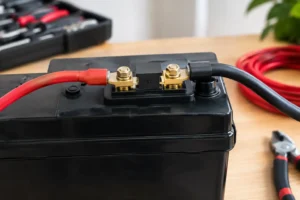
Cable size, fuse selection and connection quality affect both safety and performance. Undersized cables create voltage drop, particularly at inverter currents above 100A. The battery may be capable of delivering the required current, but poor installation can trigger low-voltage shutdowns or generate excess heat at terminals and connections.
Battery age and state of charge are equally relevant. A 200Ah battery only delivers its full designed energy when it is genuinely charged. A poorly configured charger, insufficient solar array or incorrect charge-controller settings can leave the battery routinely undercharged. Monitor energy in and energy out with a shunt-based battery monitor rather than relying only on voltage readings.
Solar charging can extend runtime indefinitely
Without charging, runtime is finite. With enough solar production, a 12V 200Ah battery can support continuous off-grid use by carrying energy from daylight into the evening and overnight period.
If your daily consumption is 1,000Wh and your solar array produces 1,200Wh on a useful day, the battery can recover the energy used and retain a margin. If your loads consume 2,000Wh daily but the panels generate only 800Wh, the battery will still discharge by around 1,200Wh each day. No battery capacity can solve a persistent energy deficit.
For a 12V 200Ah battery, solar panel sizing should be based on daily consumption, local season and available mounting area. A 200W panel may be adequate for light summer touring loads, but 400W or more is often a better match for a compressor fridge, connectivity equipment and regular device charging. An MPPT charge controller is normally the efficient choice where panel voltage and installation layout allow it.
Choosing the right system voltage
A single 12V 200Ah battery is a compact, capable solution for many campervans, small motorhomes, boats and backup systems. It is particularly effective where loads are mostly 12V and inverter demand is occasional or below about 1,000W.
As inverter power and daily energy demand increase, a 24V system deserves consideration. The same wattage at 24V requires roughly half the current, allowing more manageable cable sizes and reducing voltage drop. Larger motorhomes, liveaboard vessels and fixed off-grid installations often benefit from 24V battery storage and a correctly matched inverter and solar controller.
A 12V 200Ah LiFePO4 battery gives reliable autonomy when the electrical system is designed around actual consumption, not optimistic assumptions. Measure your daily watt-hours, allow for conversion losses and build enough solar charging to replace the energy you use. That approach delivers quieter nights, fewer generator hours and power you can depend on when shore supply is out of reach.



No comment yet, add your voice below!